Corfu /
Κέρκυρα
Two visits. First return to Greece since the age of eight.
The first country I ever visited — if you don't count the transit stop in Bangkok — was Greece. I was eight years old. Many years seem to have passed since.
Coming back to Corfu in November 2025 was a return to an idea as much as a place. Greece in memory was vast, ancient, sea-scaled. Corfu in reality was smaller and stranger and better: a Venetian colonial city on an Ionian island, the layers of occupation still legible in the architecture, the painted shutters, the particular quality of afternoon light through the old town's back streets. I arrived in winter, almost no tourists, soft rain, people simply going about their lives. A quiet business everywhere — the kafeneia, the market, the afternoon football on the Spianada. Genuine stillness in the alleys that lead nowhere in particular.
Both visits were walked with the attitude of the flâneur: no itinerary, no destination, open to whatever the island offered. The hachidō practice runs beneath all of this — the 8 is always a possibility, a structuring attentiveness that travels with me everywhere — but on these walks the practice dissolved into simple wandering. Moving slowly. Looking carefully. Letting the island reveal itself at 5 kilometres per hour.
November 2025
First encounter. Mostly Corfu Town and its immediate surroundings. The Liston and Spianada; the Venetian alleys; the cemetery south of the walls; a long walk out to the airport perimeter and back.
December 2025
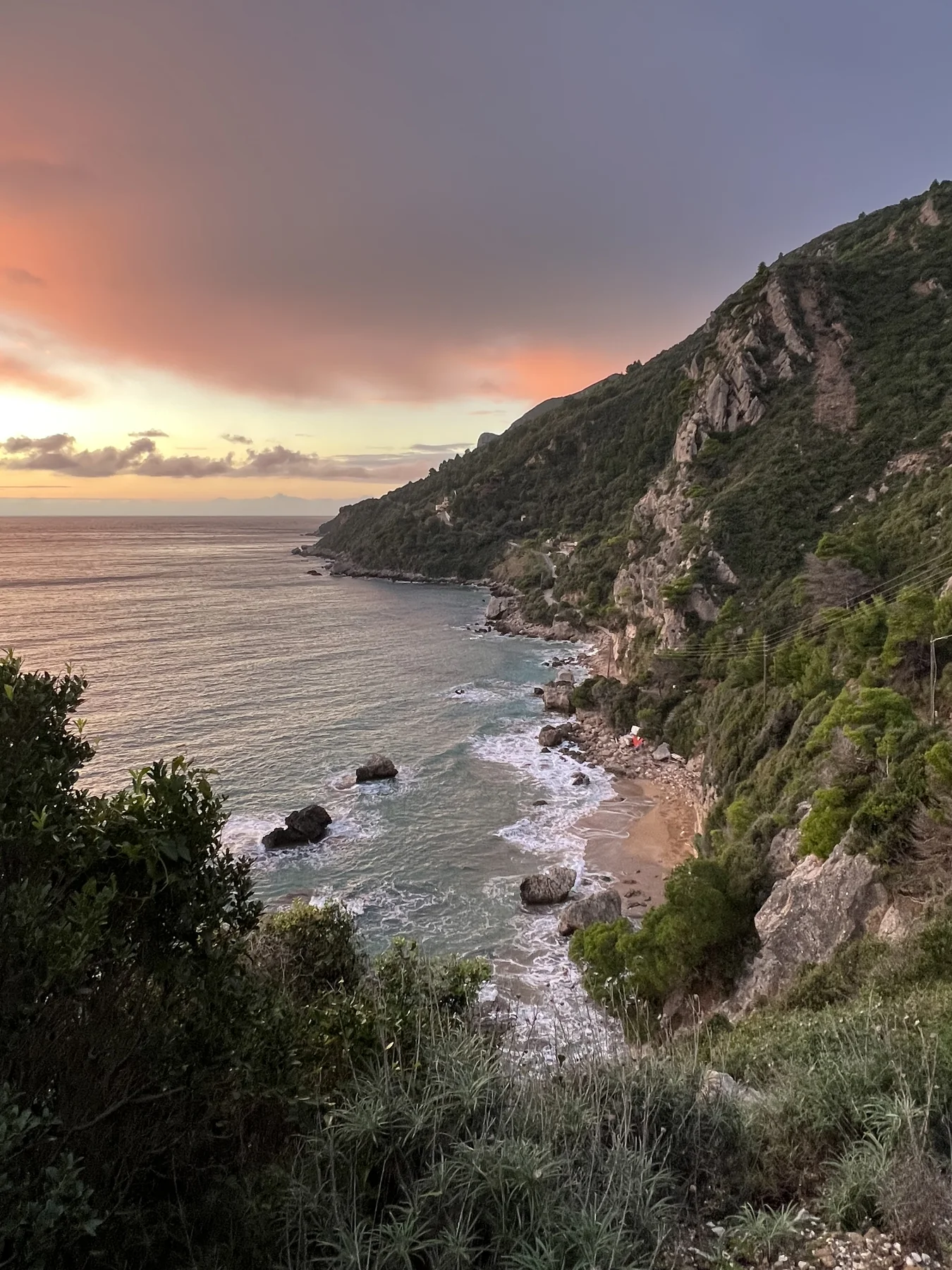
Return and deepening. Rain, slower pace. More of the island beyond the town: the lagoon church at Kommeno, the hill paths above the port, the west coast at dusk. Two hachidō finds — including a near-perfect specimen at close range.
Further afield
Kalami and Kassiopi on the north-east coast; Mirtiotissa and Paramonas on the west and south-west. These by car, explored on foot on arrival.
First Visit
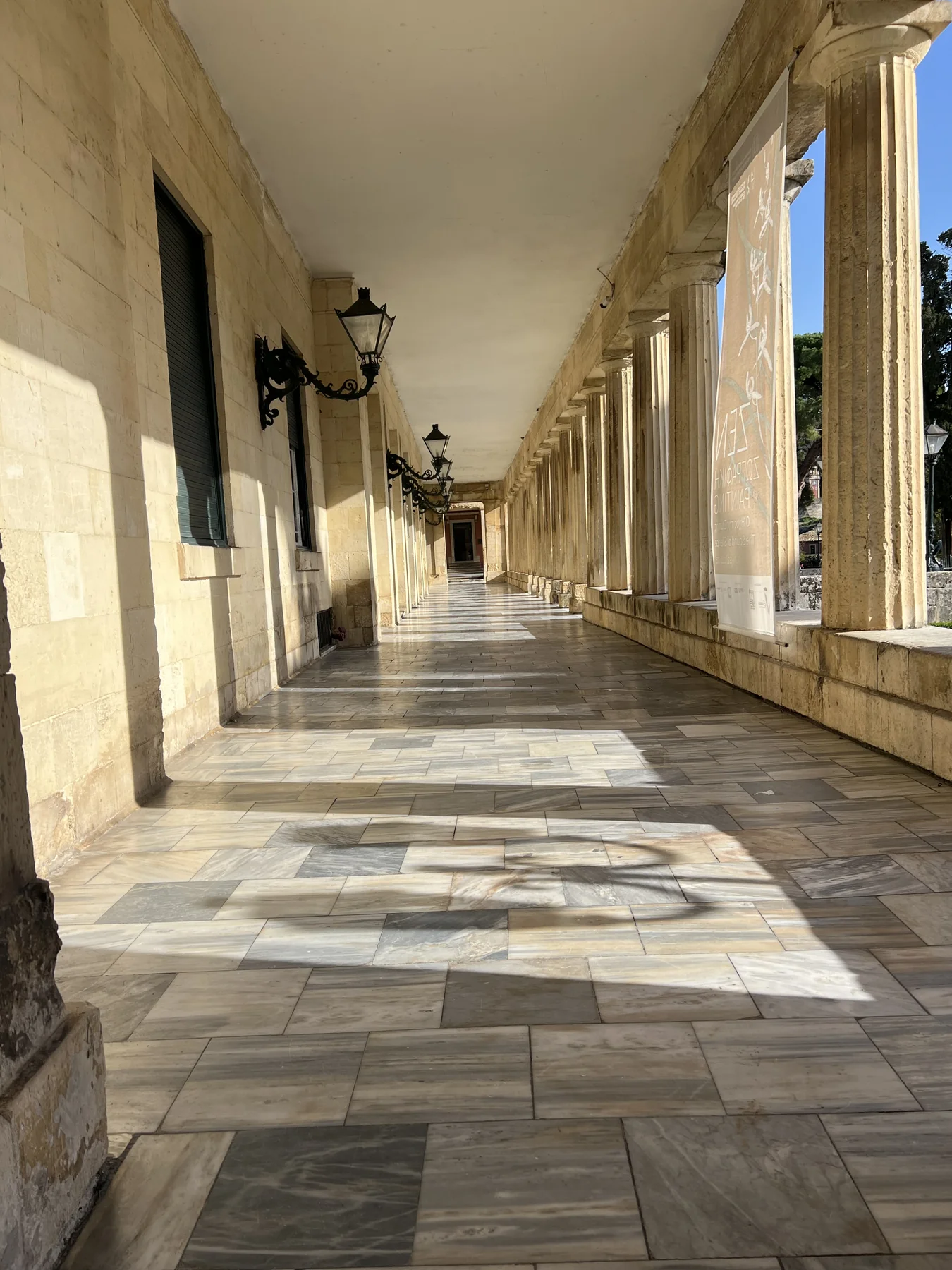
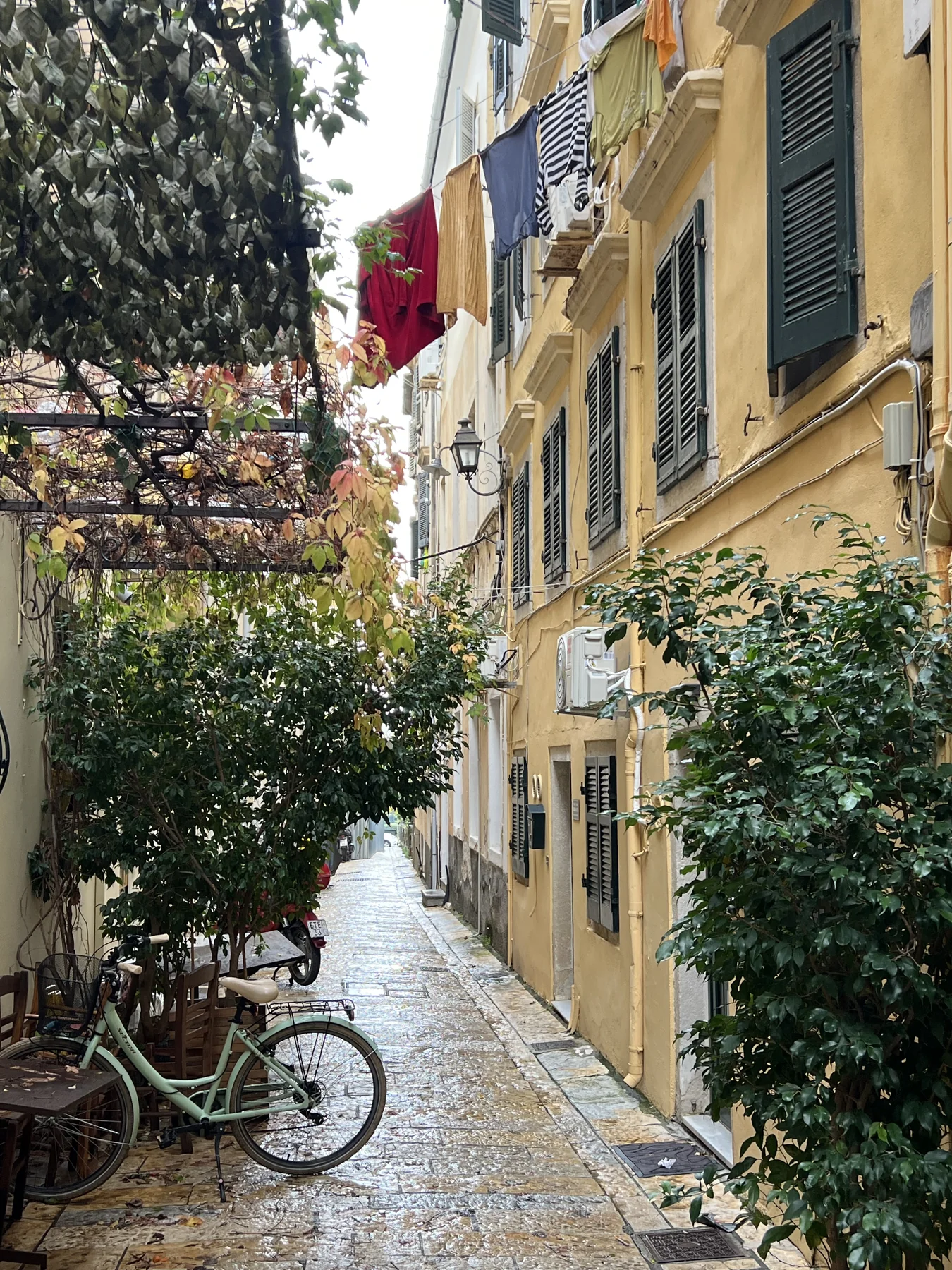
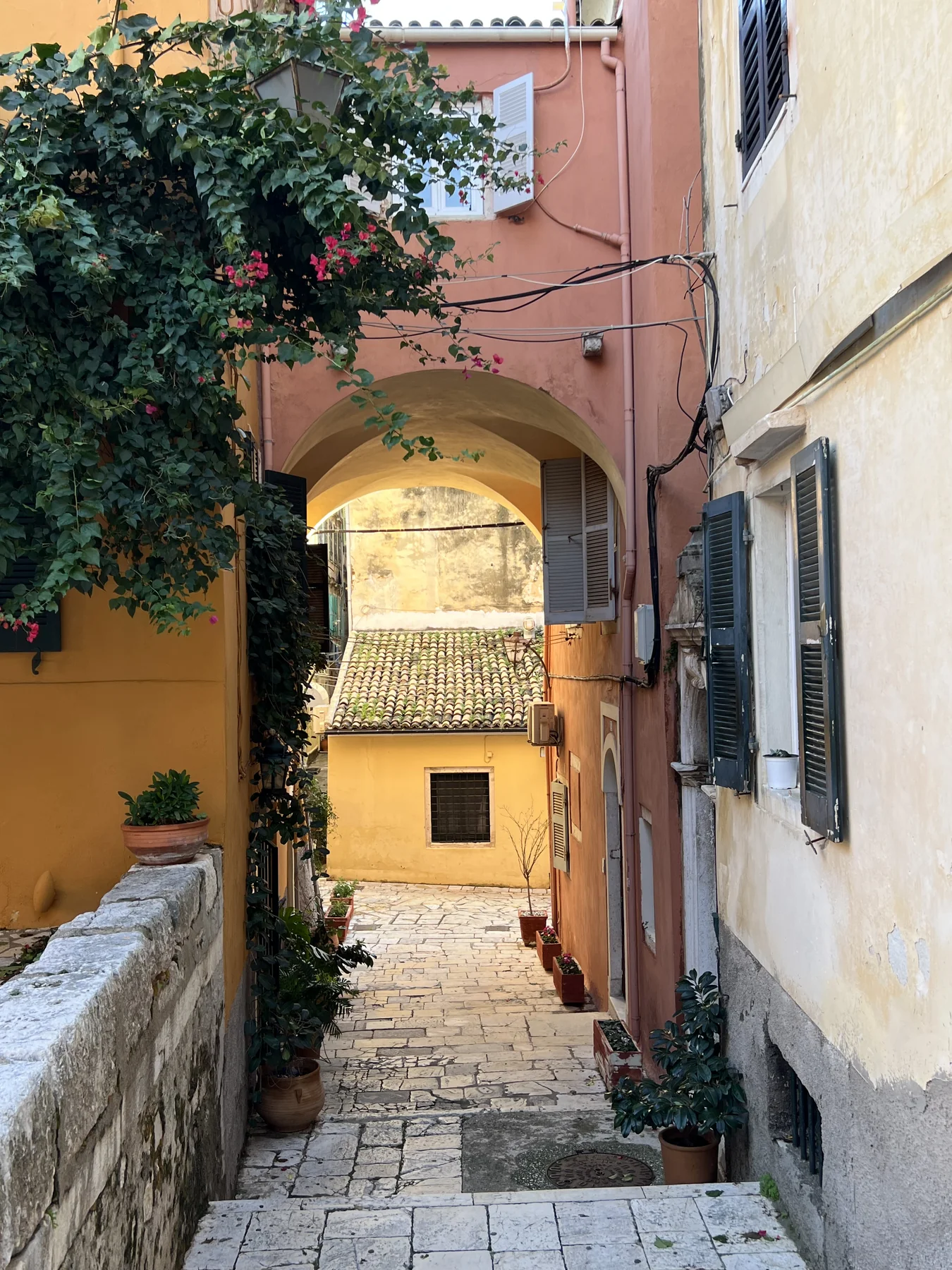
The old town absorbed most of the attention. The Liston was almost empty — a neoclassical arcade built under French occupation, now lined with kafeneia that were open, on the whole — just sparse on customers. The backstreets behind it form a very particular kind of labyrinth: narrow, Venetian in plan, the facades painted in every permutation of ochre and terracotta and the particular faded pink that seems endemic to the Ionian islands. Laundry overhead. A bicycle leaned against a wall. The ordinary details that accumulate into a place.
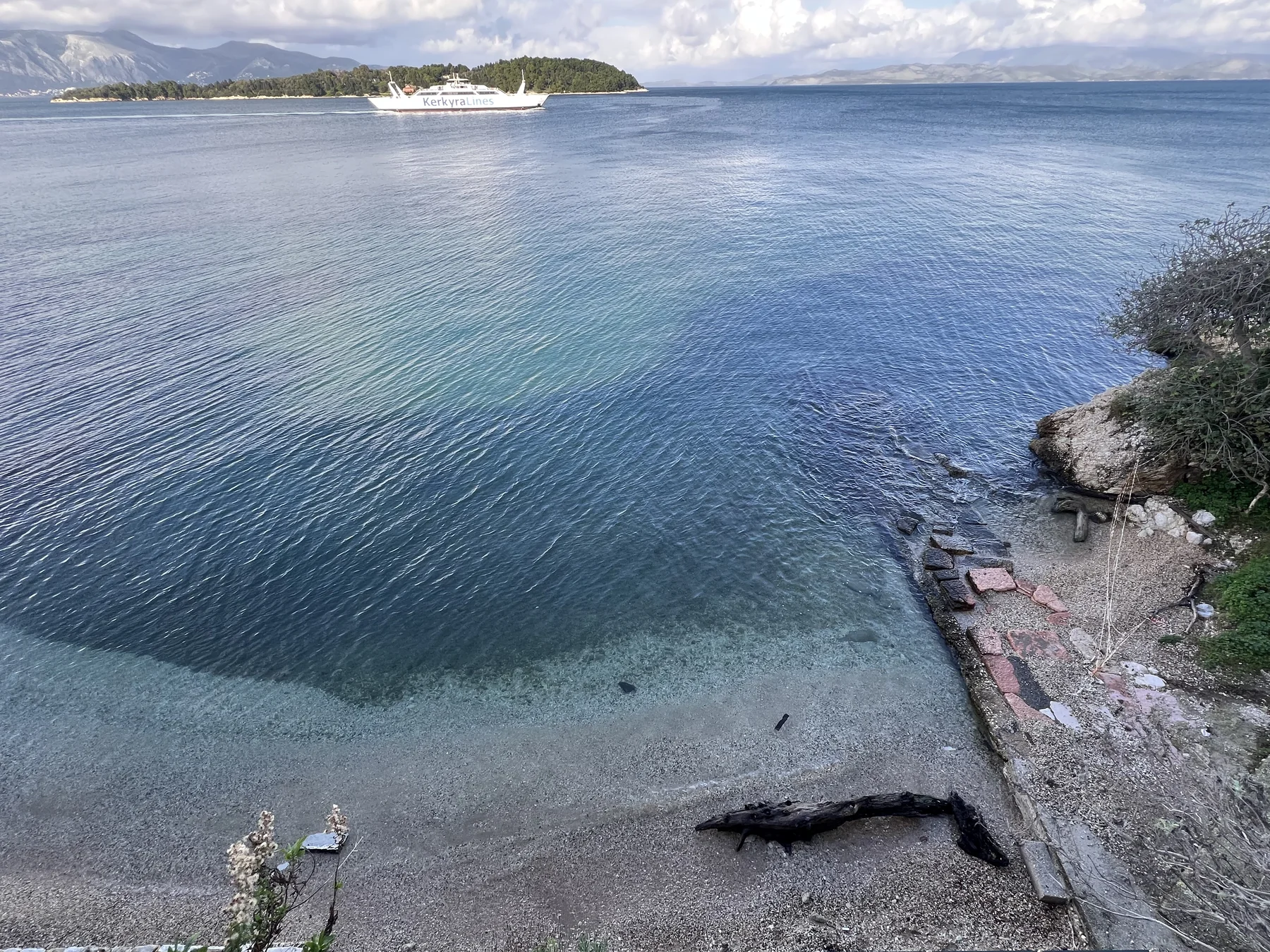
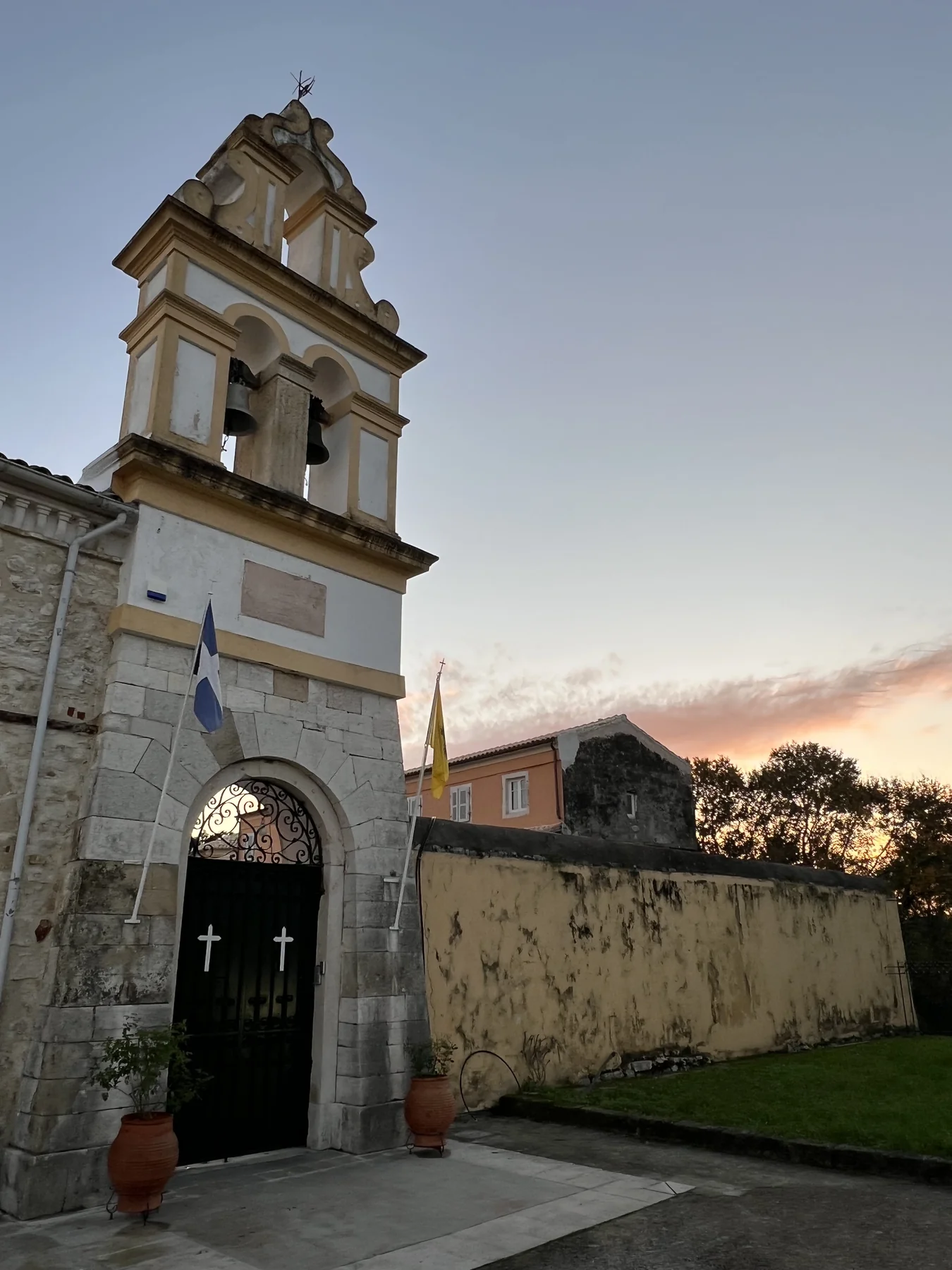
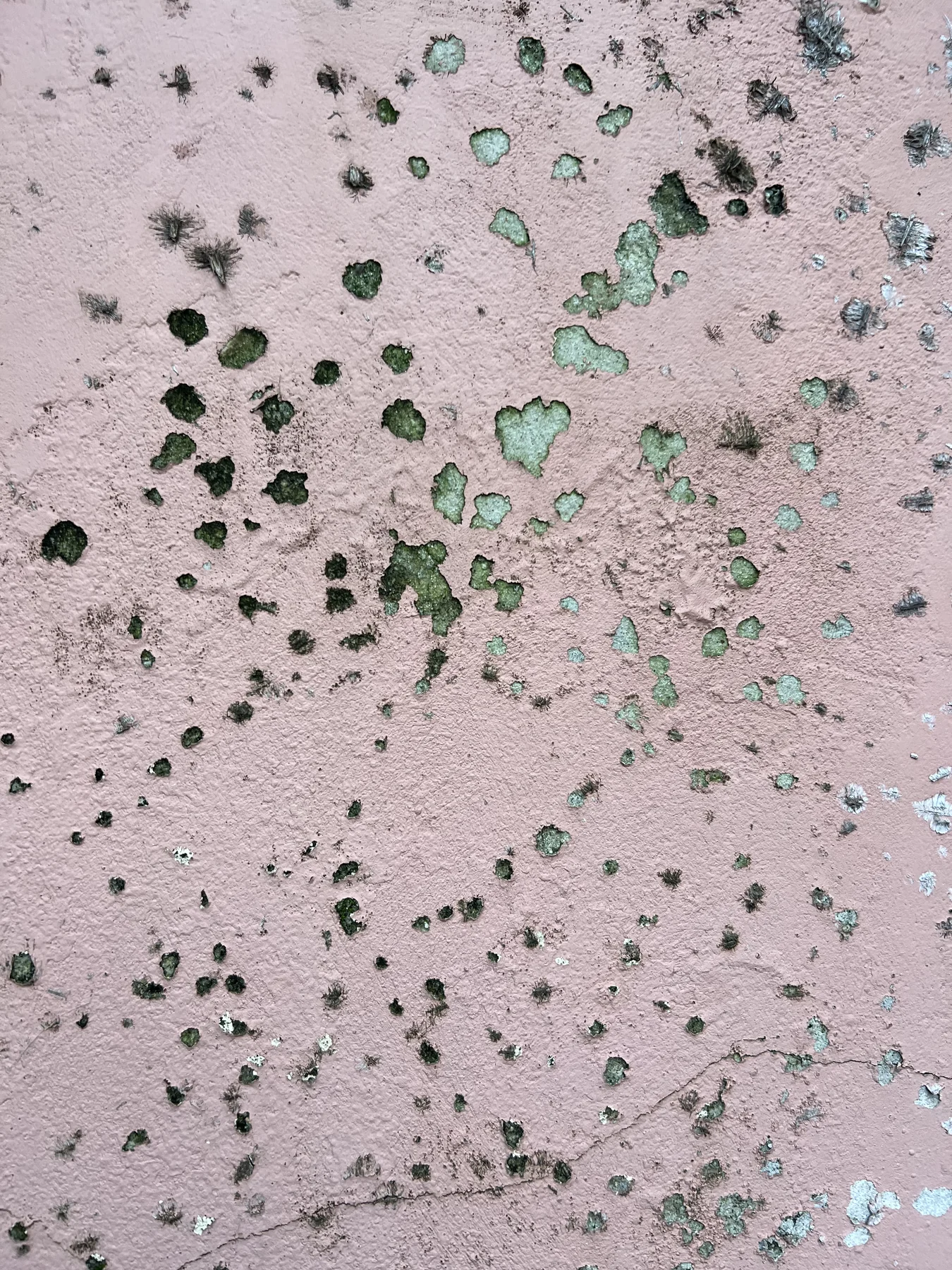
Walking south through the town: past the New Fortress, down through the quieter residential streets below it, to the cemetery with its white marble crosses and dense planting of cypress. Then further — along the causeway to the airport perimeter, the runway visible through chain-link, planes banking low over the sea. On a pink rendered wall near the airport: a colony of green lichen, forming shapes that looked like a map of something not yet discovered.
Return
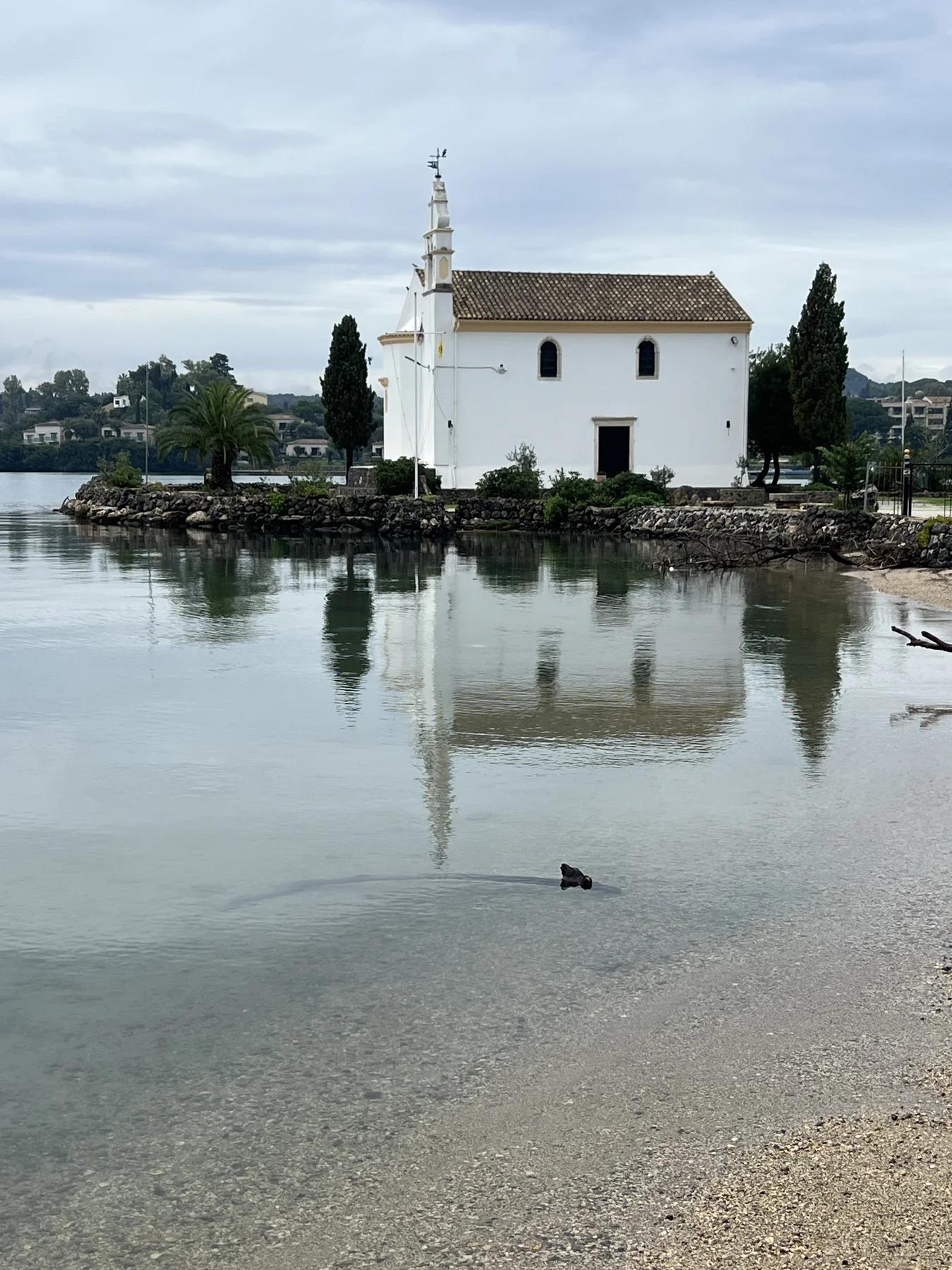
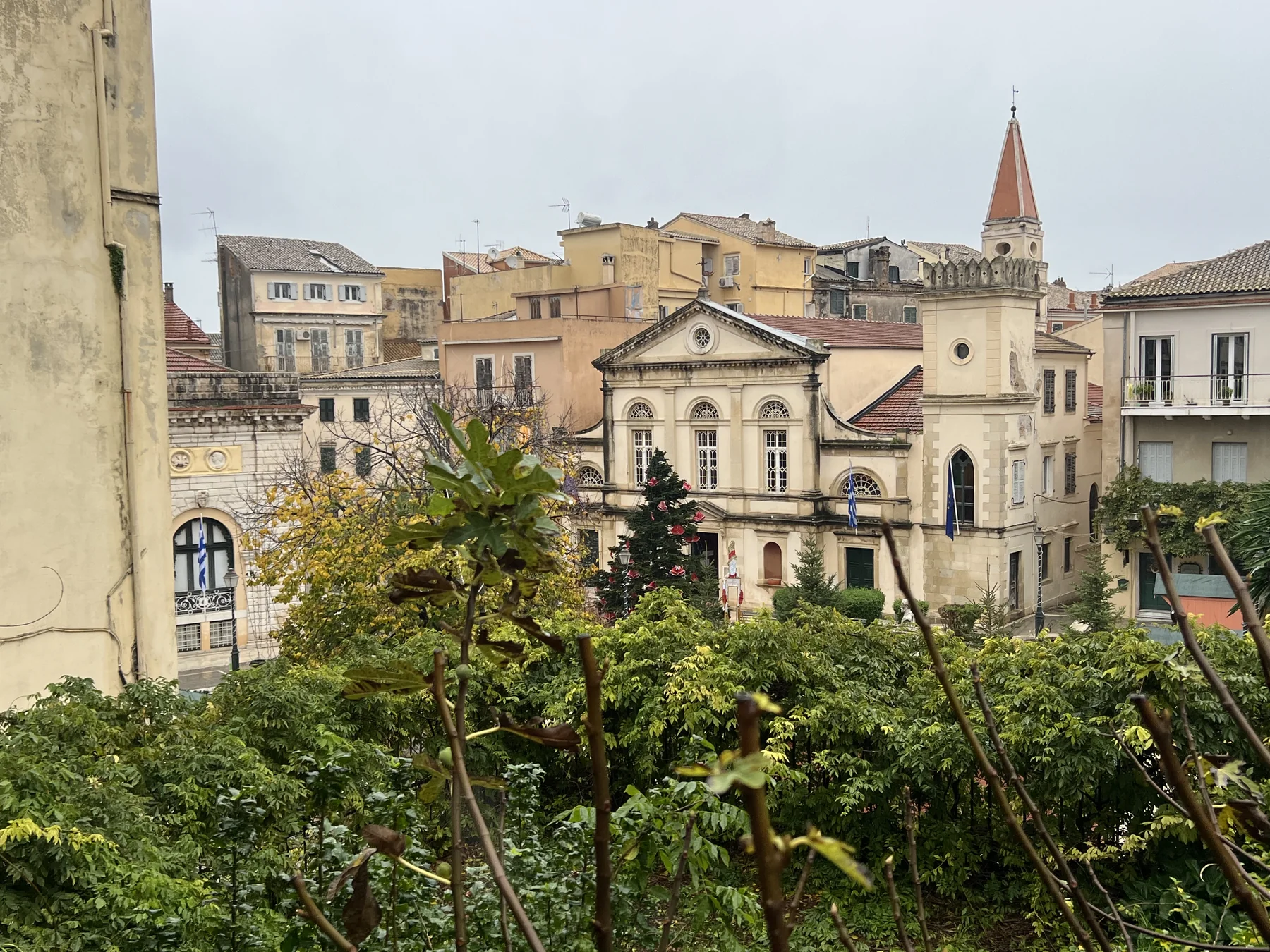
December Corfu was quieter still, the light lower, the palette shifted toward grey. Rain most days. The same streets looked different. A small white church on a tiny islet at Kommeno, perfectly reflected in still water, a coot crossing the frame. The view from the hill above the old town in rain: the rooftops, the church spires, everything slightly softened.
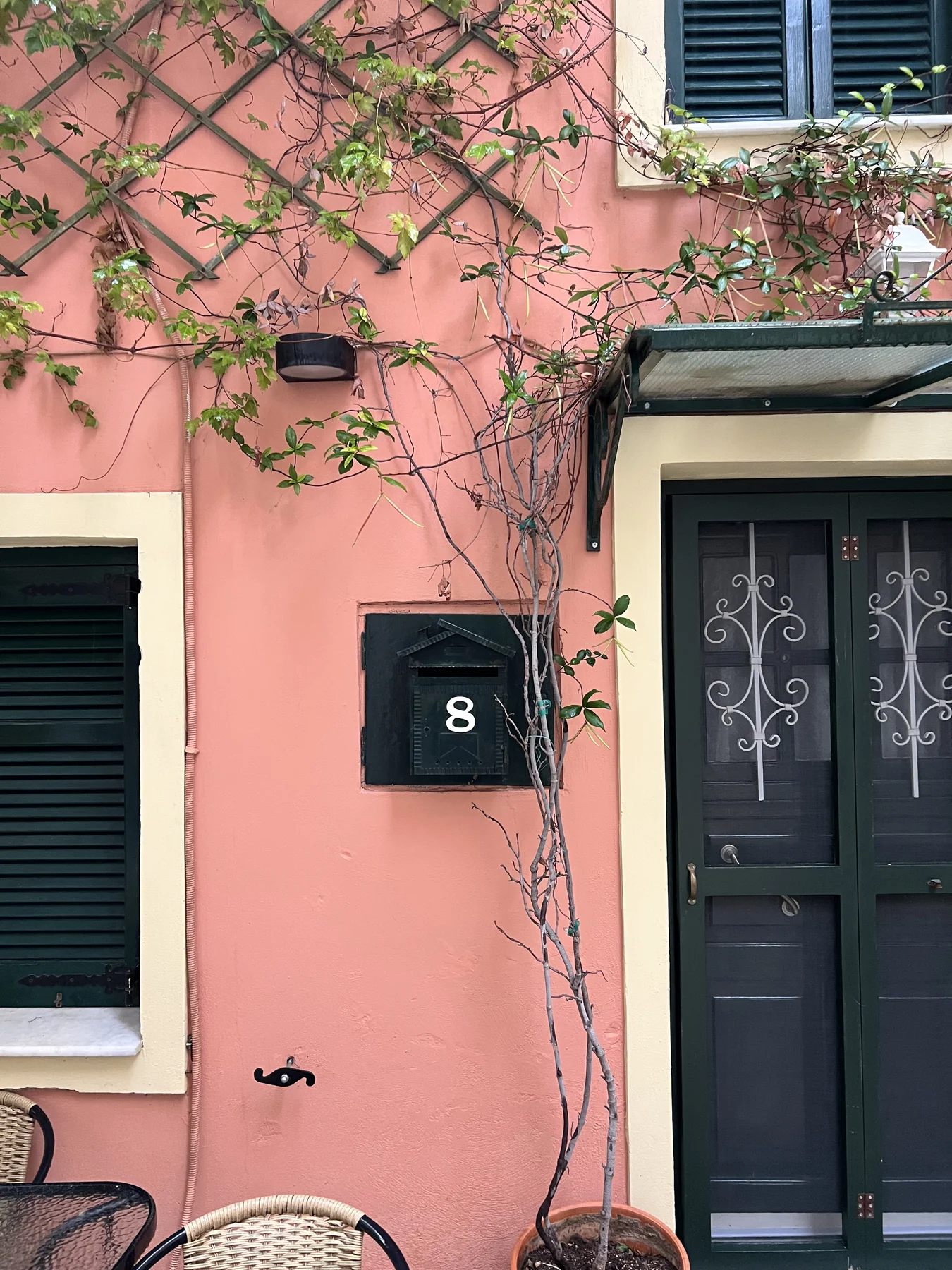
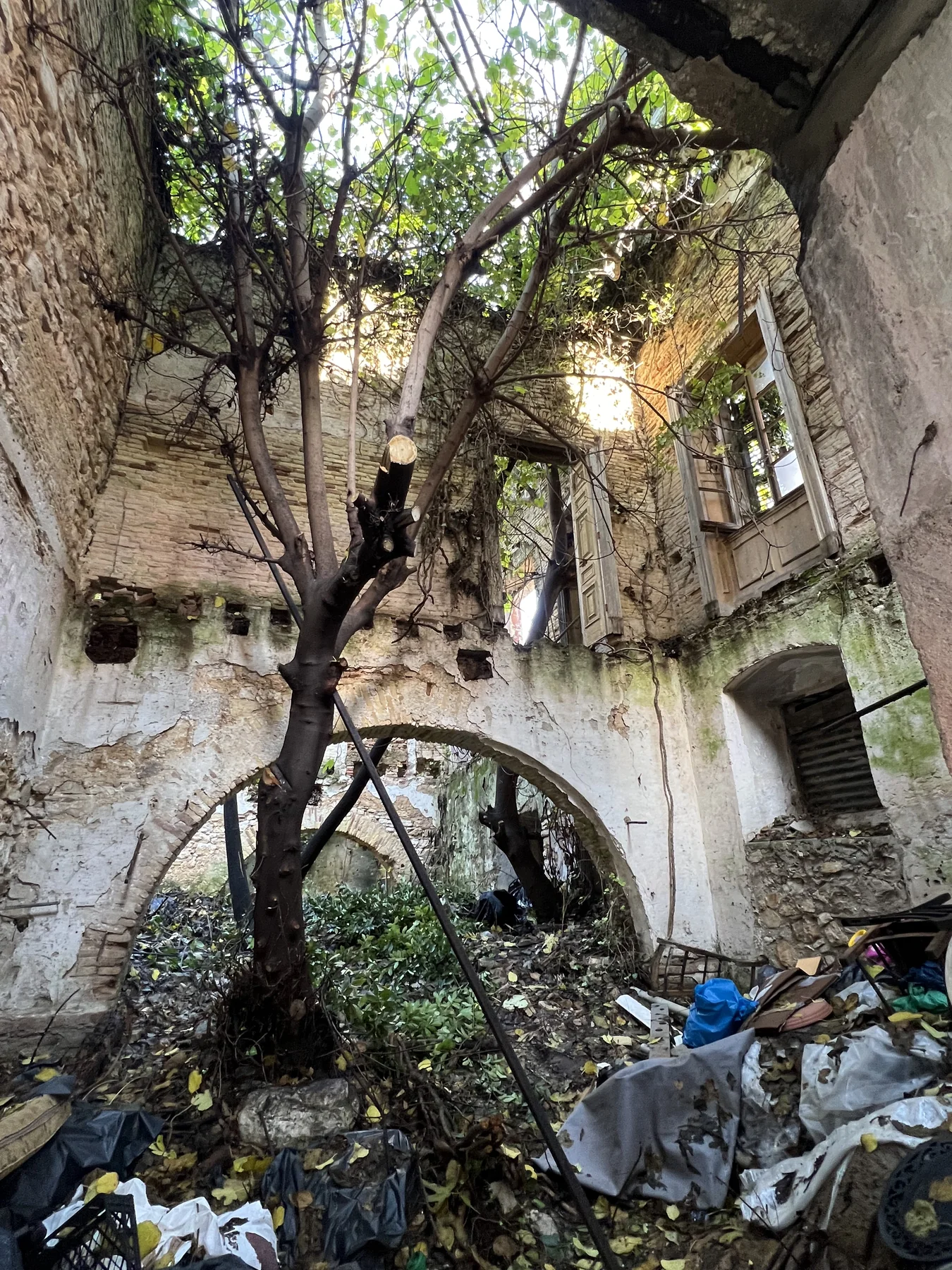
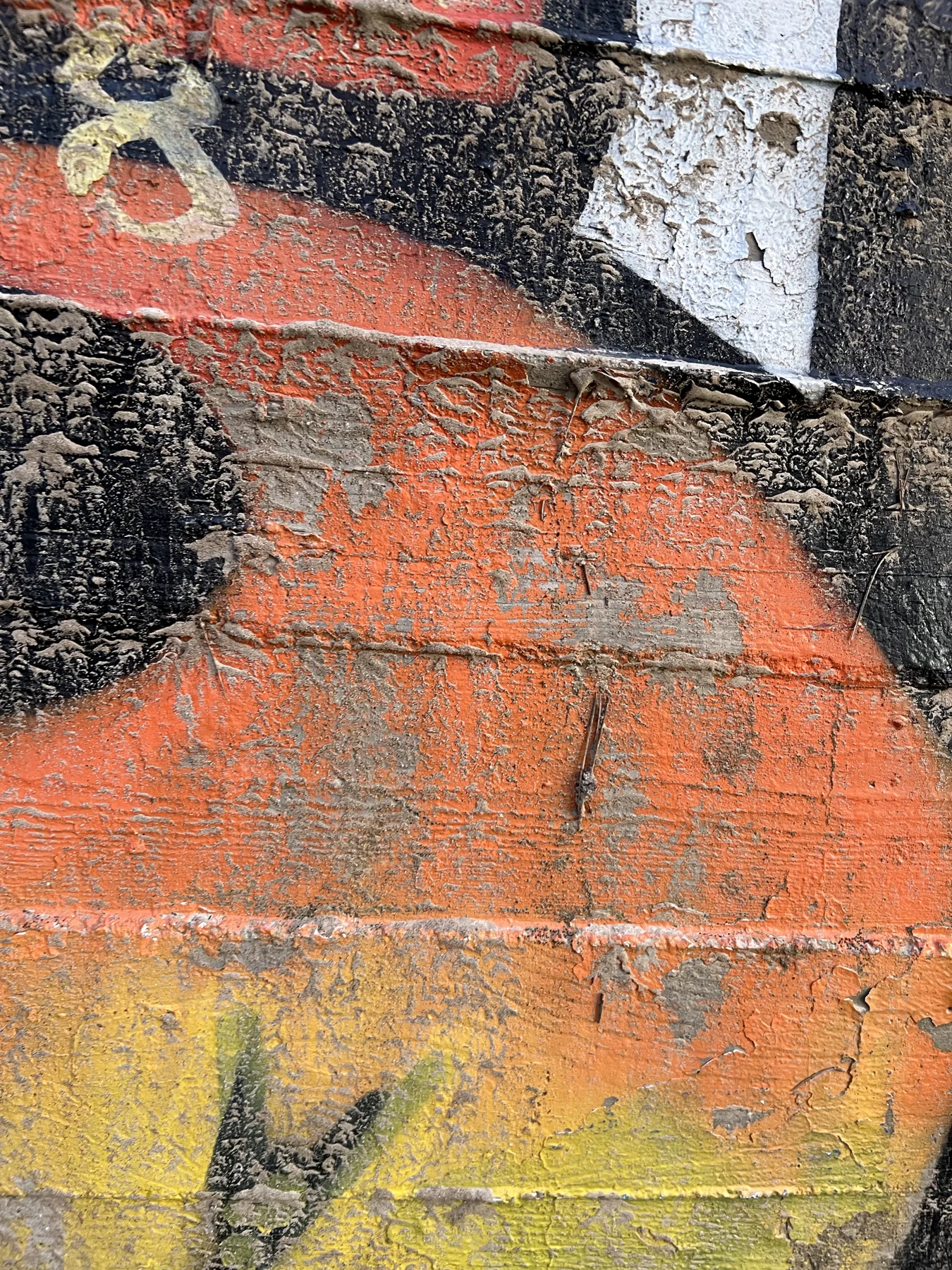
Two hachidō finds. The first: a letterbox numeral on a salmon-pink building in the old town — the 8 almost formally perfect, set against dark green shutters and a tracery of bare winter vine. The second came later, on a painted surface on the west coast: the 8 emerging from layers of orange and black, found rather than sought. Between them, a collapsed building in the old town's western quarter — the roof long gone, a tree grown up through the vaulted arch, the floor covered in leaves and slow accretion.