Svalbard
81° North — the involuntary archive
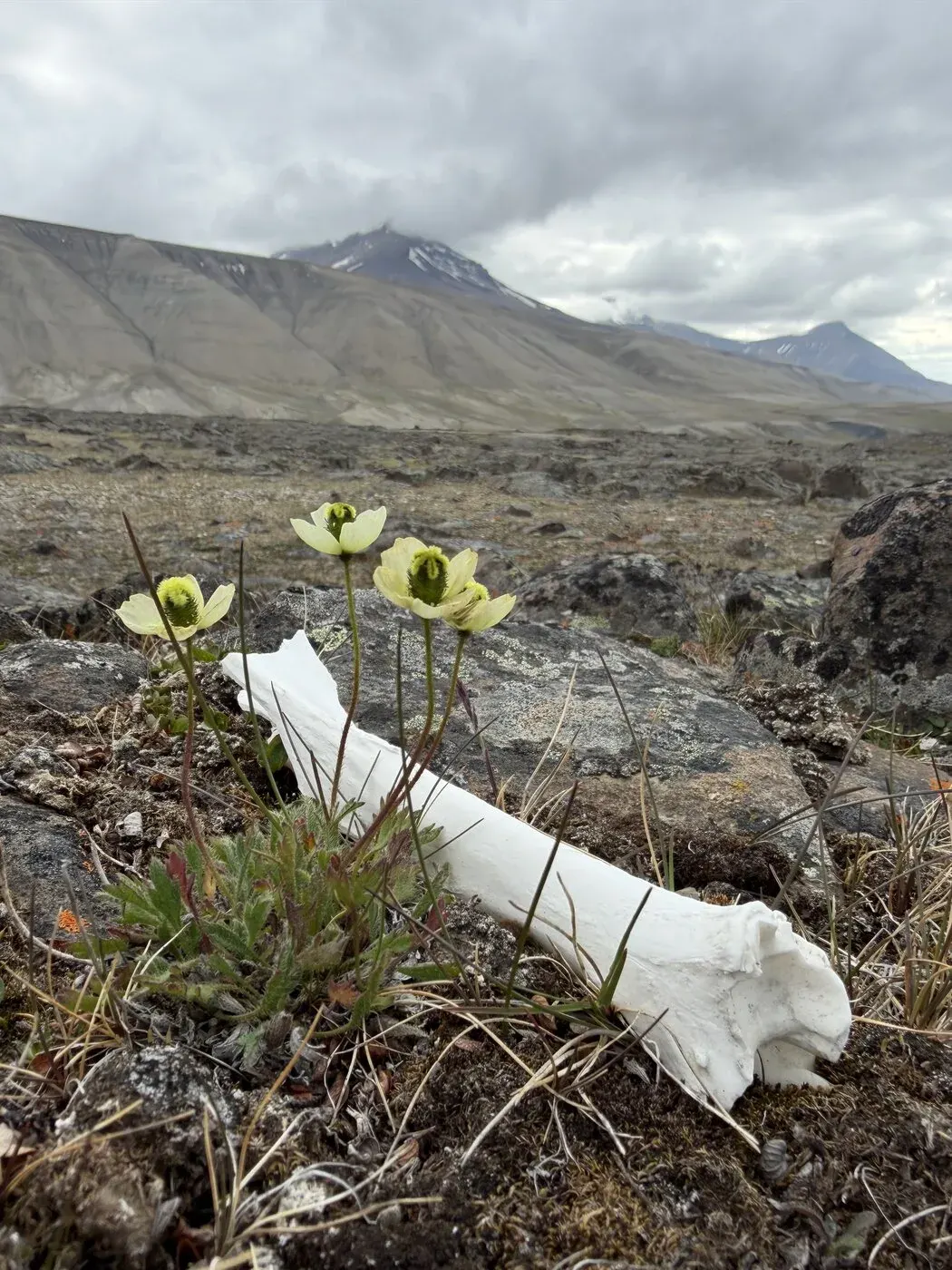
In the High Arctic, nothing is permitted to finish.
For a couple of weeks in the June–July light that never sets, the walking practice moved north — through the shorelines, tundra, moraine and fjords of Svalbard, to a furthest point of 81°36.55′N, over sea ice beyond the last land. What it found, with a consistency I did not plan, was things that had not finished happening: a seabird half-returned to the beach it died on; a whale vertebra bleached to the colour of the sand; a reindeer’s jaw with a flower growing where its teeth had been.
This became the fieldwork for What the Cold Keeps, an essay that reads the Arctic cryosphere as an involuntary archive — a territory that keeps what it did not choose, and cannot let end. Where Still Warm staged a cabinet of found remains, Svalbard stages the same attention at the scale of a whole landscape, held in a cold that arrests decay rather than completing it.
Three practices ran at once, as they did on the Kumano Kodo: the walk; the hachidō capture of encountered 8s; and the documentation of found remains for Still Warm, witnessed in place and never removed. Here a fourth thing joined them — a distinction the shoreline forced: what you leave, and what you lift.
Pristine, and a Sink
Svalbard is among the emptiest places a person can stand, and its beaches are among the most reliably littered in the European Arctic. The West Spitsbergen Current — the last reach of the Gulf Stream system — carries the refuse of distant economies north and files it into the strandline: kelp and feather and bone and rope and the sun-shattered confetti of hard plastic in a single band. The dead are found already embedded in it.
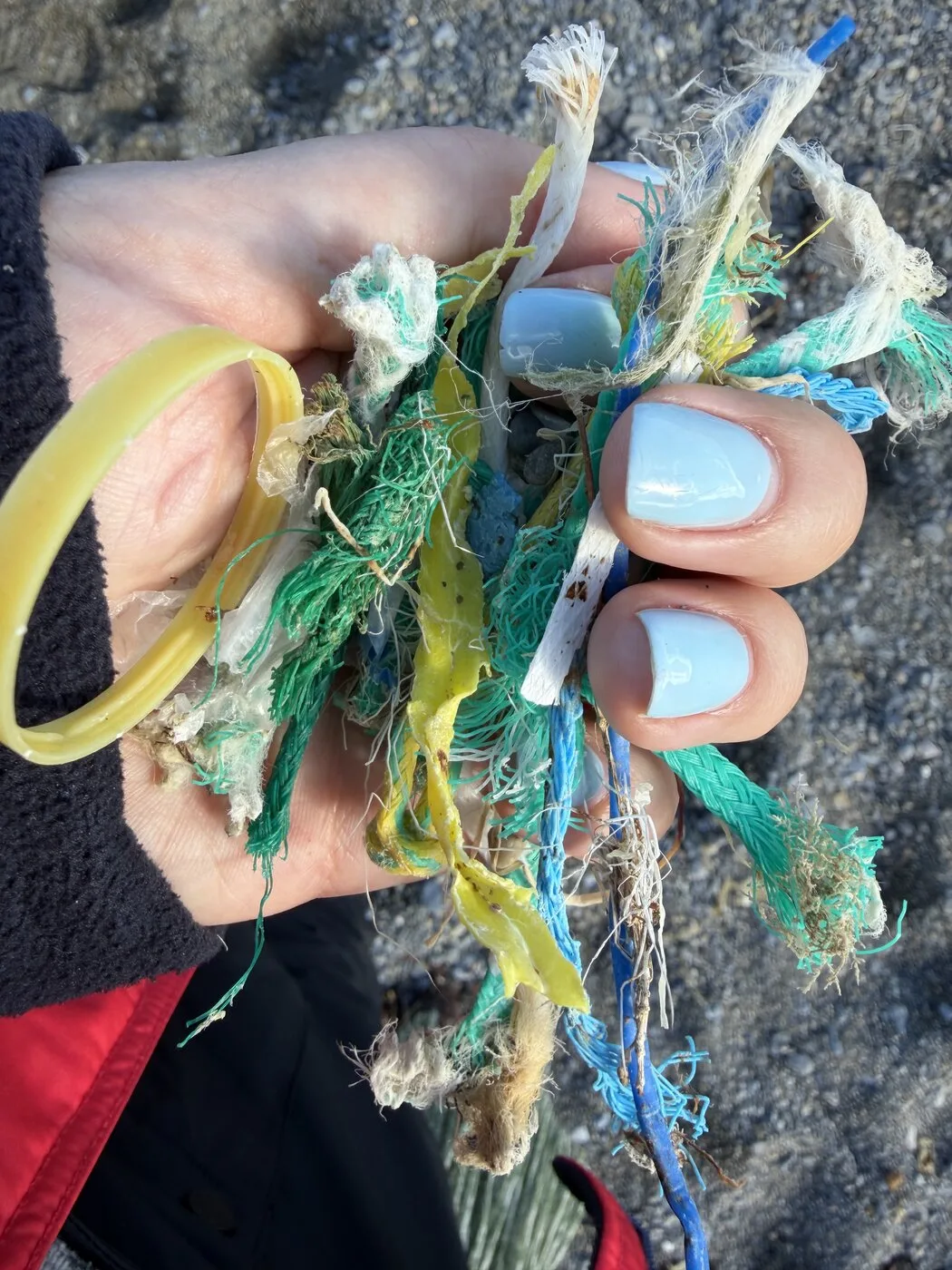
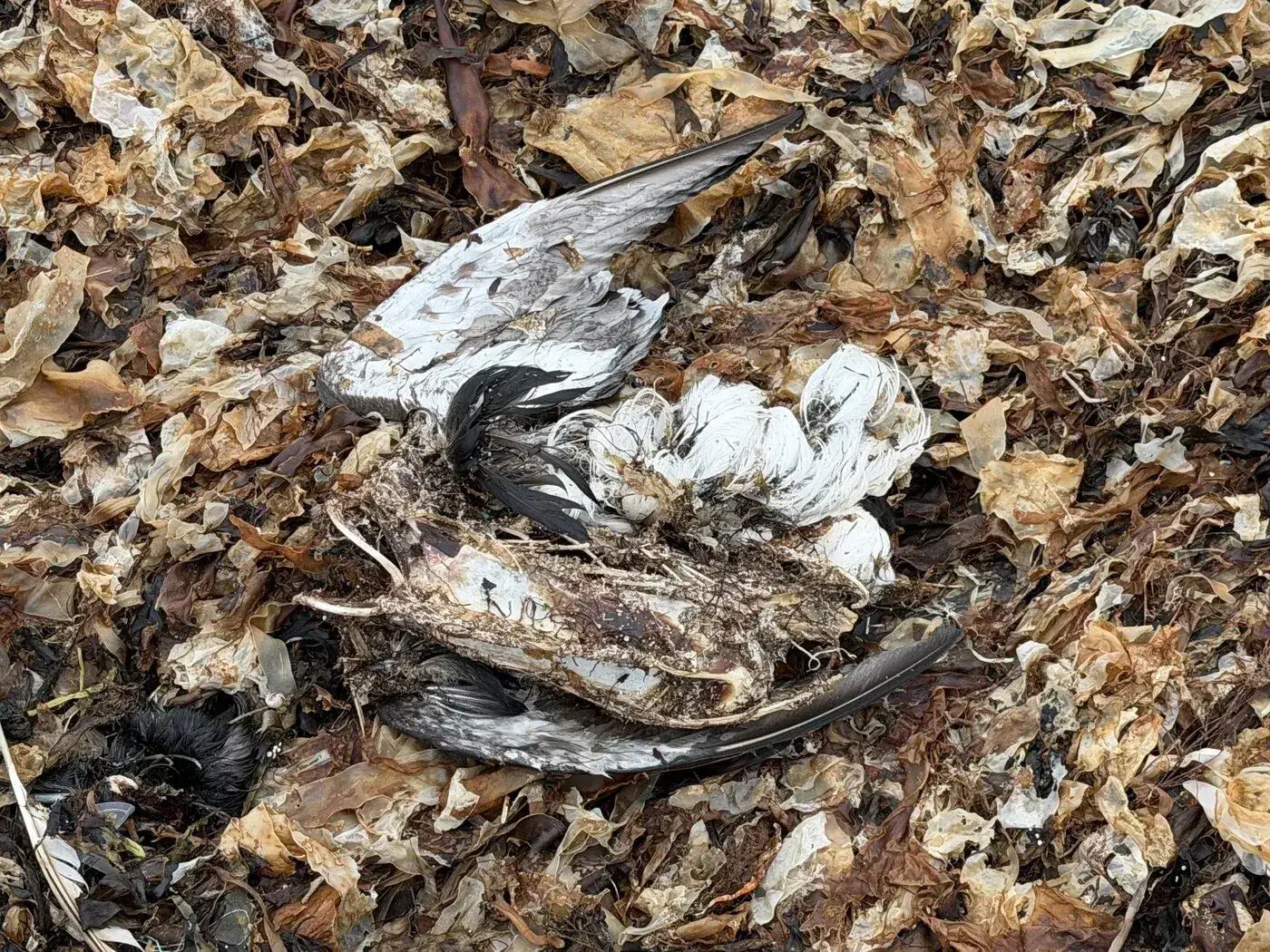
The practice sorts the wrack by hand. The bones are witnessed and left where they lie; the plastic — a violation the sea lodged here, never part of the place — is lifted out and carried away. Non-extractive attention, worked on a polluted Arctic beach, turns out to require both moves, and to depend entirely on telling them apart. What you leave and what you lift is the whole of the ethics.
Bones That Will Not Decompose
In temperate ground a dead thing is on its way out, and the encounter is governed by time pressure. Here the cold suppresses the whole economy of rot: the reindeer skull, the vertebra, the bird in the moss are not leaving. They have arrived at a bleached, odourless, permanent middle and stopped there — for years, decades, longer — kept in the open by cold.
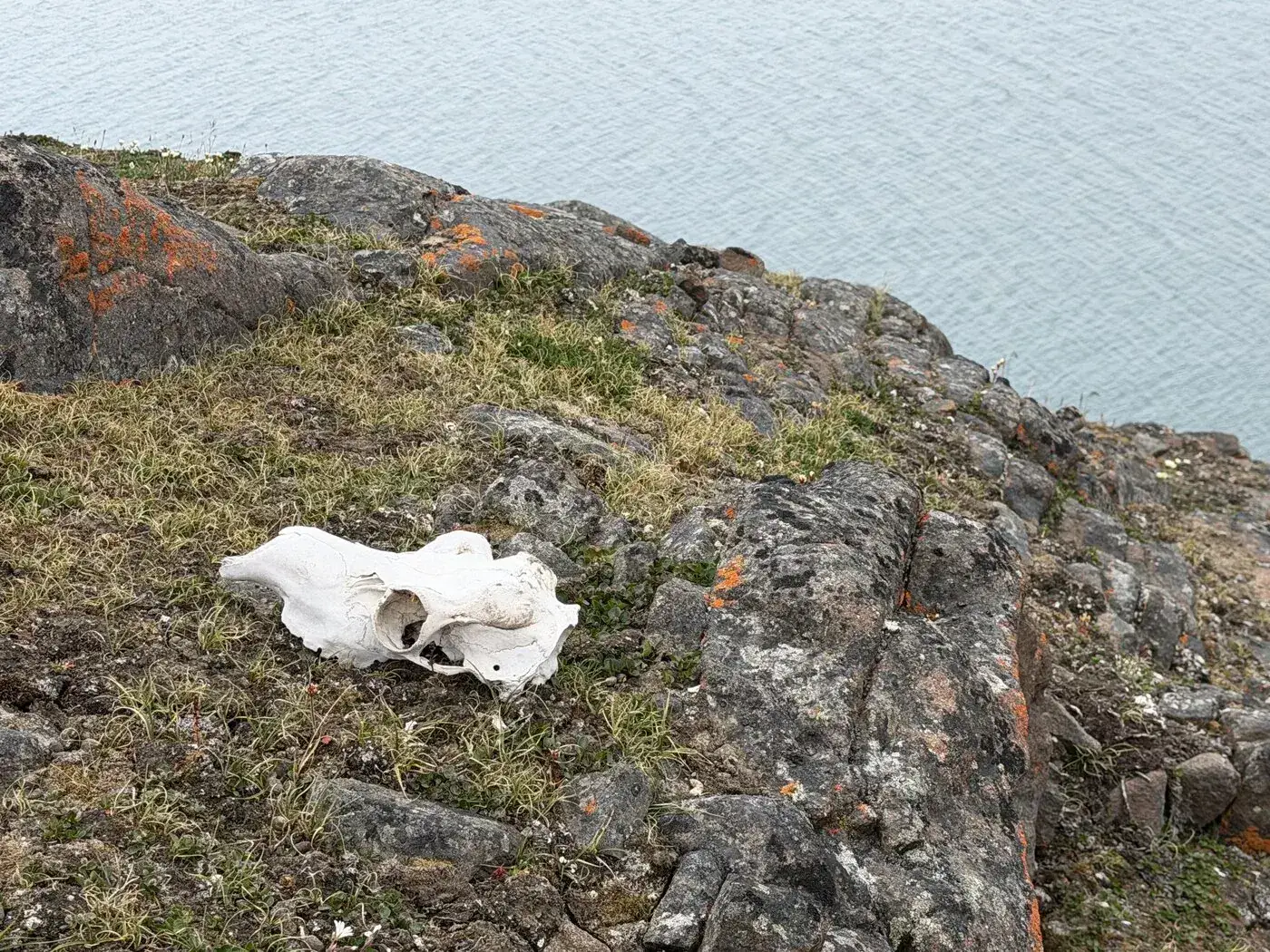
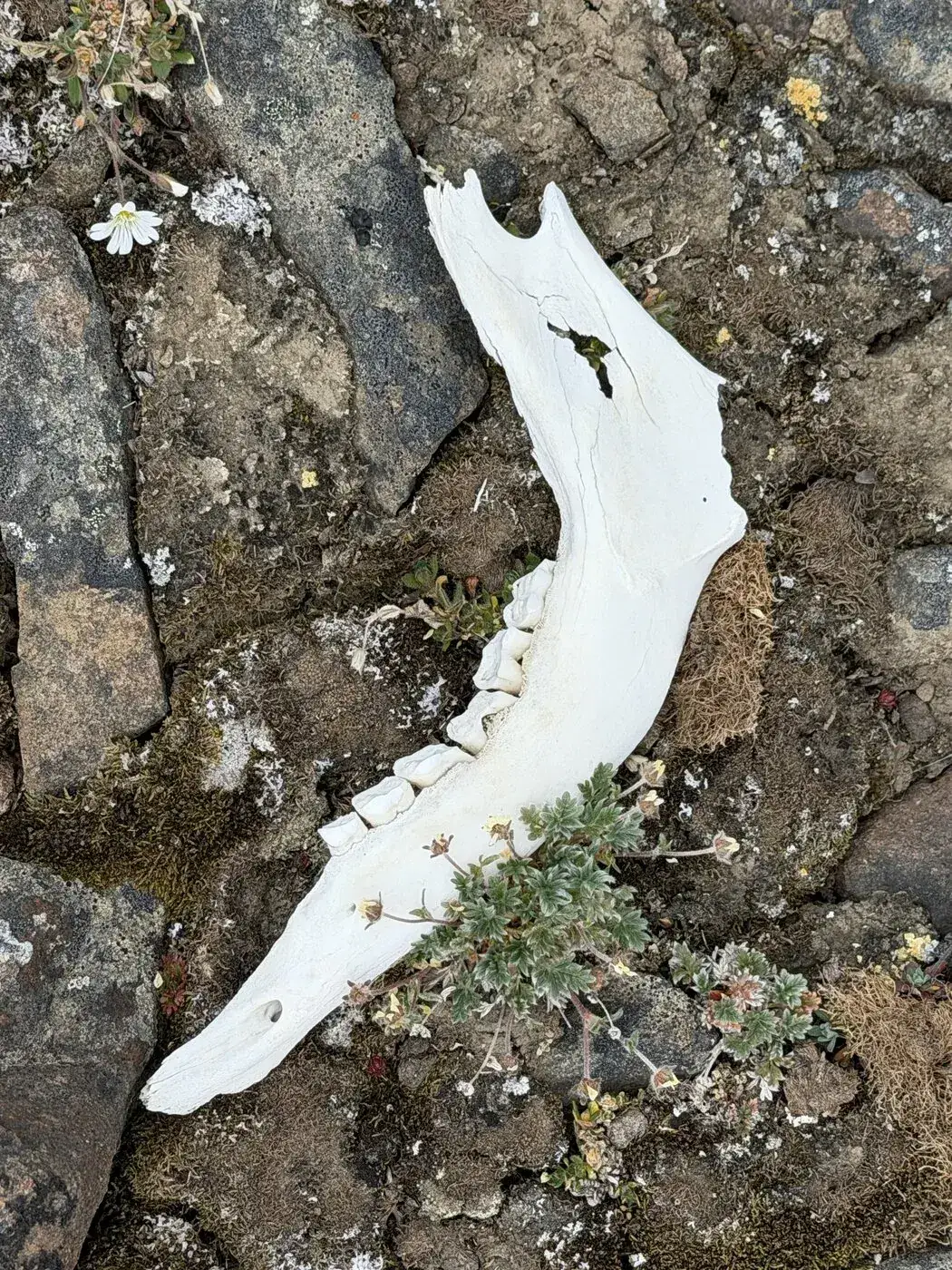
And yet the tundra insists on the second half of the image. Life does not arrive to clear the remains away; it comes up beside them, on the same slow clock — a poppy through a long bone, avens in a jaw — neither consuming nor consumed. This is the condition the essay names deferred decomposition: not an ending, and not a rebirth, but keeping.
The Glacier’s Own Archive
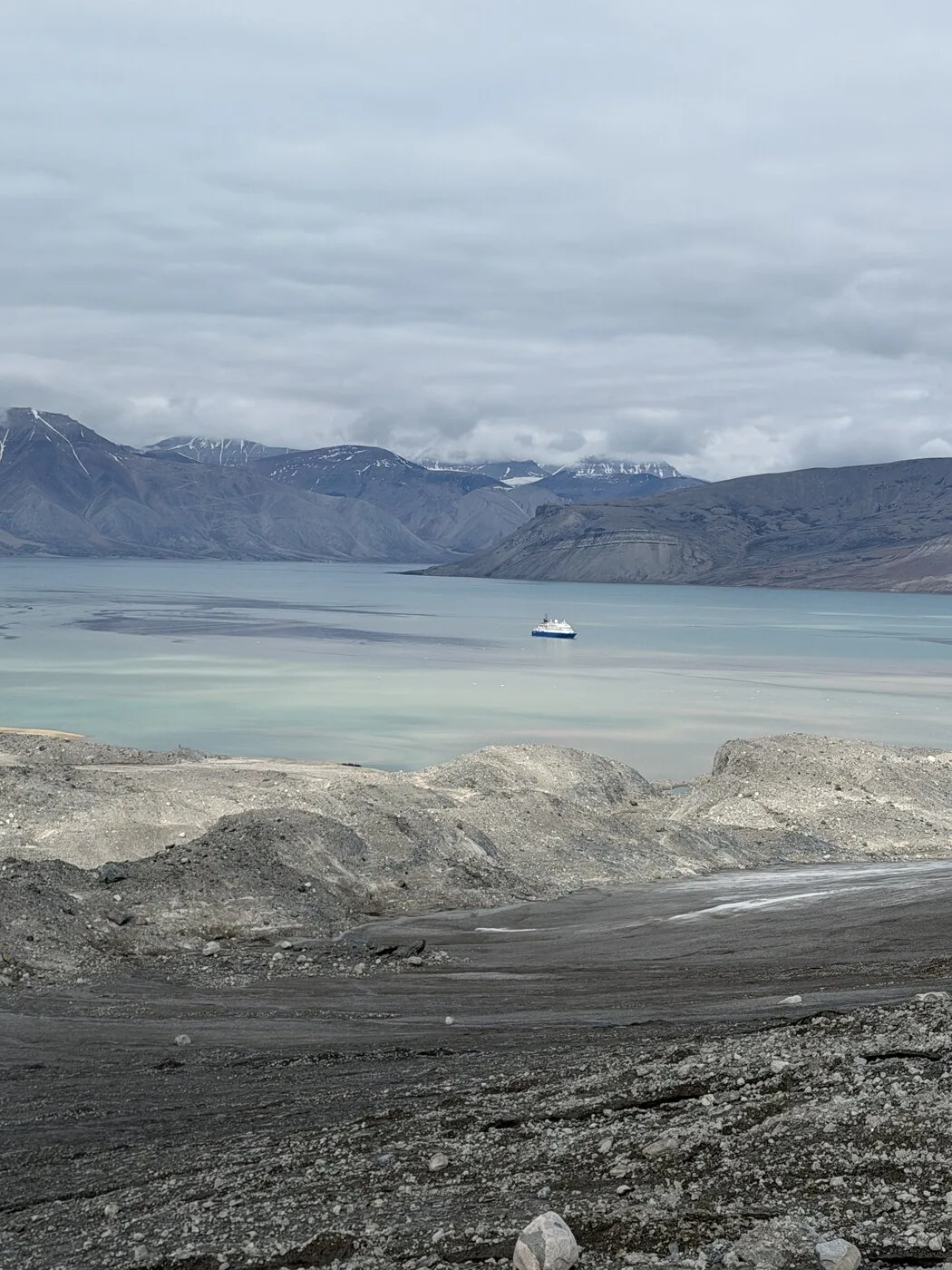
The glacier is the largest of the involuntary archives, and it defeated the instruments. A laser rangefinder returned distances the body could not feel; scale here becomes real only by walking up onto the ice and letting it be large at you.
The grey rubble in the foreground is not the valley floor. It is moraine — the debris the glacier has ground from the mountains, carried, and dropped where the ice let go: the glacier’s own collection, filed in the order it was released, and now unspooling faster than any deliberate vault could read it.
The Cemetery, and the Vaults
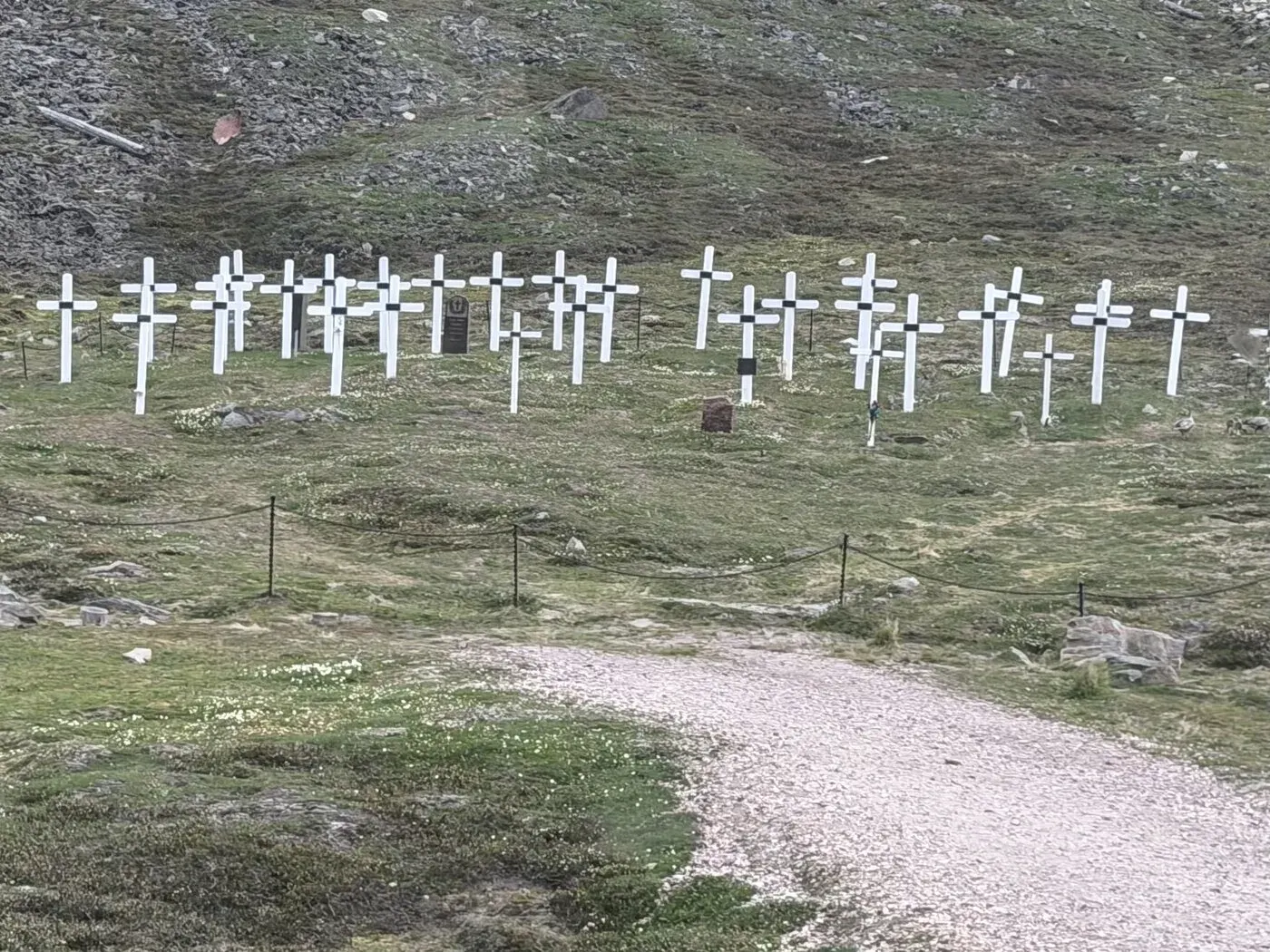
The human version of deferred decomposition waits under the same ground. Around 1950, burial in Longyearbyen effectively stopped: the permafrost does not receive the dead so much as hold them, working them slowly back toward the surface. Residents near the end of life, or the end of a pregnancy, are flown to the Norwegian mainland — so that the beginning and the end of a life cannot be completed on the island.
And into this same cold, humanity installs its most deliberate archives: the Global Seed Vault and the Arctic World Archive, driving the seeds and the source code of a civilisation into permafrost on the reasoning that cold does not forget. The involuntary archive holds the influenza dead of 1918; the deliberate one holds our backups. They are the same refrigerator — and, as the climate warms, it is beginning to fail.
The Northernmost 8s
The pattern practice reached its northernmost point here. On a beach on Chermsideøya, at 80°28′N, three eights: two laid in native stone by human hands about a century ago, in the era of the trappers and whalers, and a third, incomplete, grown of moss and algae on a rock.
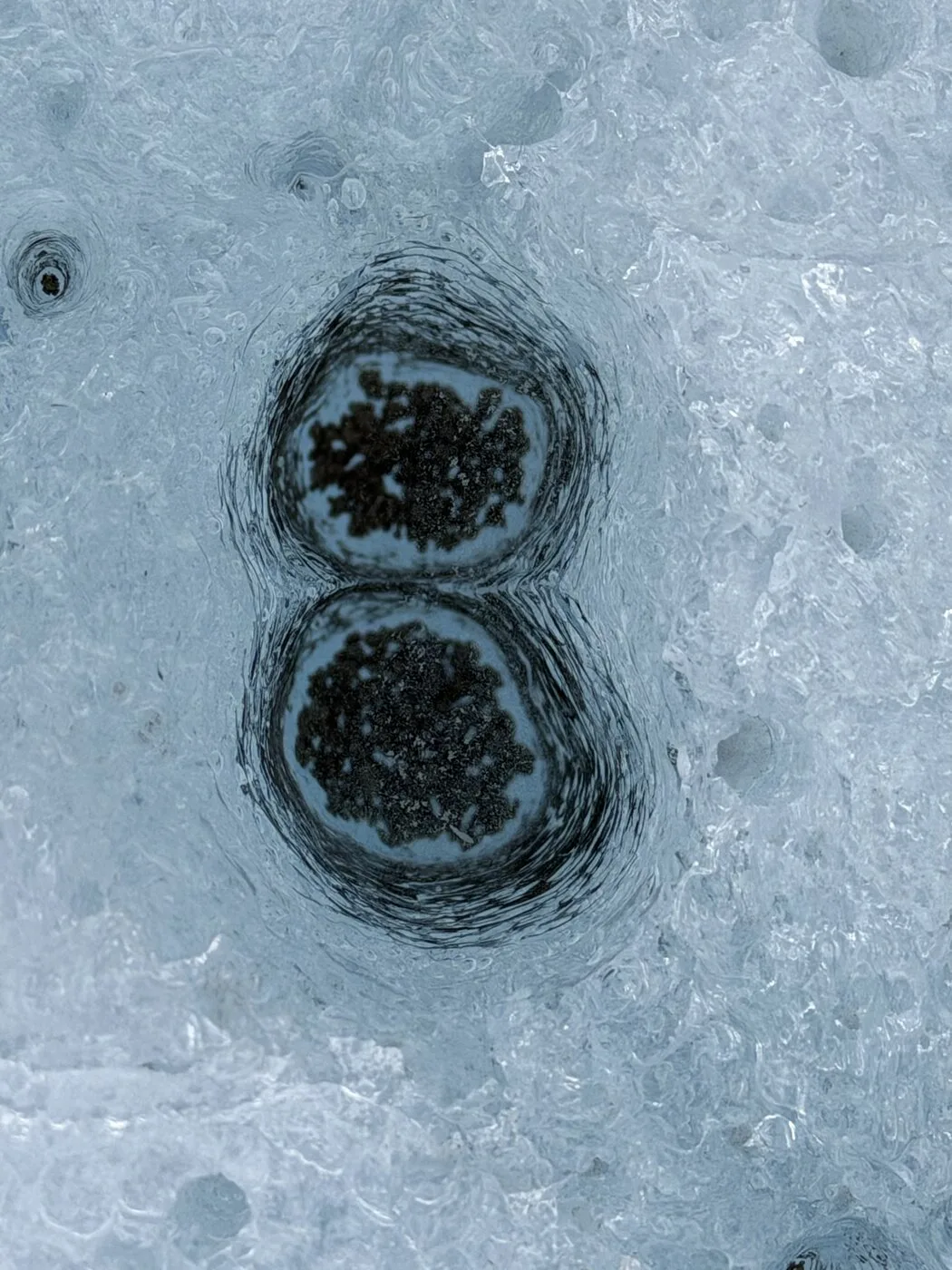
And on a shelf of glacier ice, a figure of eight the cold had written itself — two cryoconite hollows, stacked, that would hold the shape until the next warm day rearranged them. An archive is, among other things, a machine for finding legible shapes in what it holds: the ice keeps its grit, and for a day writes a numeral we recognise.
The Practice Within the Practice
Every archive is addressed to a reader who is not yet here, and Svalbard’s are unusually literal about it. The Seed Vault is a letter to future farmers; the Arctic World Archive’s marquee deposit is the world’s open-source code — addressed less to us than to whatever will one day run it. This is the question the whole practice keeps circling: who is the archive for, if not us — and what if its reader is not human?
To make art here now is to work in the last decades of a preservation that ran, for tens of thousands of years, on cold alone — and to try to be adequate to it with an empty hand, a full pocket of somebody else’s plastic, and a camera that takes only the trace.